Innovative Flood Response Tech Projects
Flood Response Tech Projects30 August 20267 min read
A wave of homegrown technology is already responding to the Rasuwa–Bhote Koshi flood rescue portals, drone teams, satellite mapping, and missing-person registries built by Nepali institutions, companies, and volunteers within hours. Here's what's already been built, who's building it, and where more technical capacity can help.
By Dilisha Panta — Organiser, Nepal Hackathon

Technology in Action: Rescue portals, drones, satellite mapping, missing-person systems and emergency connectivity are already being deployed by Nepali institutions, engineers and volunteers.
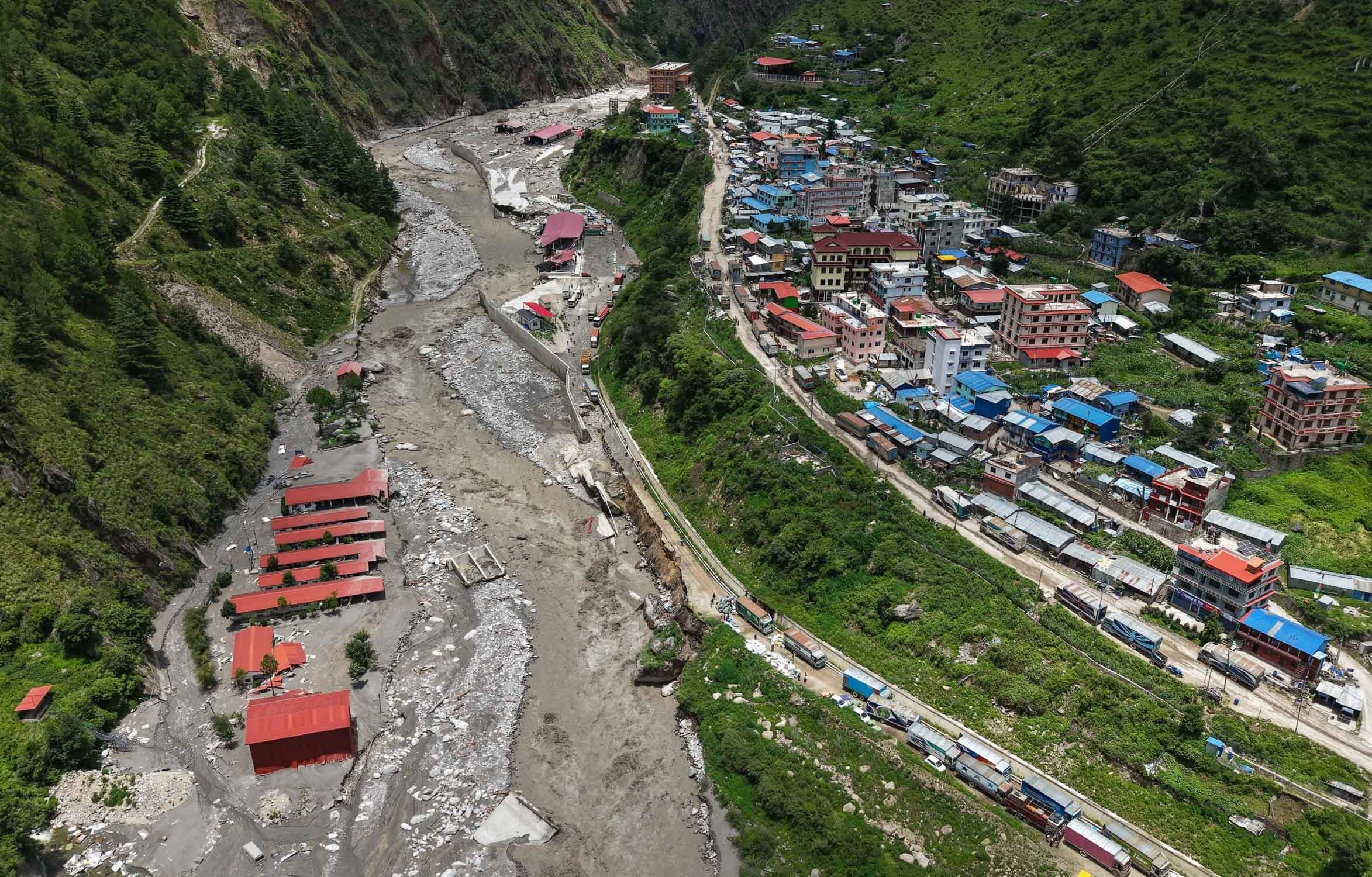
The recent Rasuwa–Bhote Koshi disaster has produced an extraordinary wave of technical response inside Nepal. Government teams, private companies, drone operators, civil servants and independent developers have launched or adapted systems to help find missing people, coordinate rescue operations, assess damage, restore communications and make rapidly changing information easier to use.
That matters for anyone hoping to help. The starting point should not be the assumption that Nepal is waiting for outsiders to arrive with technology. Much of the work is already underway. The more useful question is: what has already been built, who is building it, and where can additional technical capacity make those systems stronger?
The projects below are some of the most important technology efforts identified so far. They vary in scale and official status, but together they show how quickly Nepal's technology community has mobilized around the emergency.
Government rescue and coordination systems
Rasuwa Flood Rescue Portal
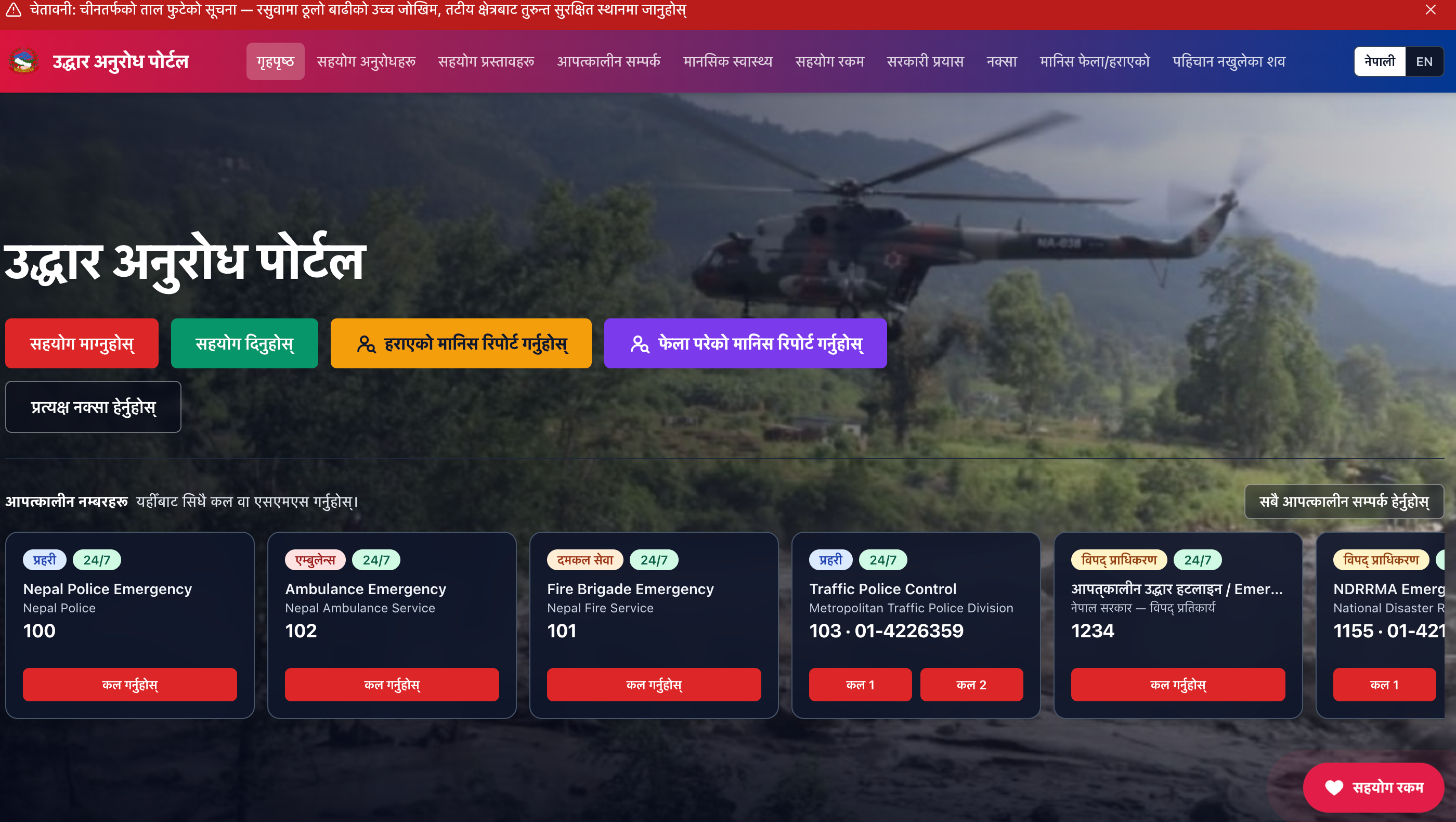
The Rasuwa Flood Rescue Portal is an official response portal tied to the Office of the Prime Minister and Council of Ministers. It brings missing- and found-person reporting, requests for rescue or relief, volunteer offers, emergency contacts, donation information and geographic reporting into one place. The value is not just the website itself: it gives the response a common public-facing entry point instead of forcing families and responders to search across disconnected channels.
SETU Rapid – Rasuwa Flood Rescue Module
SETU Rapid is an existing incident and road-response platform developed by Astra Labs and NAXA for Nepal's Department of Roads and disaster-management institutions. A dedicated Rasuwa flood module was added to support the current emergency. The platform connects field incidents, road conditions, responders, vehicles, rescue needs and relief information on a shared operational map. This is especially important because road access can change hour by hour after a major flood.
Drones are already part of the response
Drone Rapid Response Team
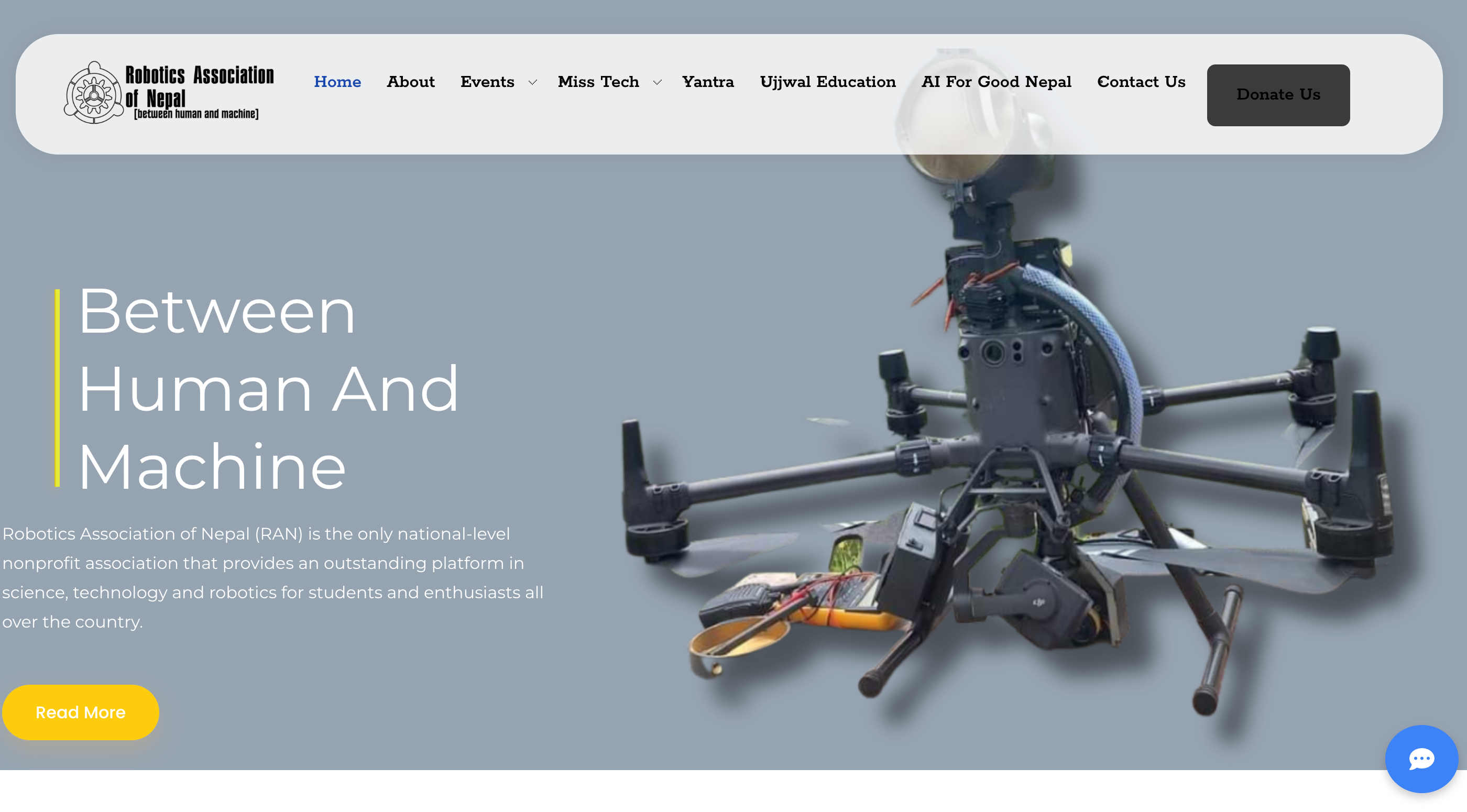
The Robotics Association of Nepal organized a Drone Rapid Response Team to support the flood response in coordination with the Prime Minister's Office. The team has focused on tasks such as survivor search, reconnaissance in areas that are difficult to reach, bridge and road assessment and real-time aerial imagery. This is a reminder that Nepal already has a capable drone community; the opportunity for outside teams is increasingly to help process, combine and operationalize the data those pilots collect.
NagarikAlert flood drone deployment
NagarikAlert, developed by Alpas Technology, has also been part of the emergency drone response. Its deployment includes thermal-search capabilities and heavy-lift cargo drones that can support relief delivery in areas cut off from roads. NagarikAlert itself is an emergency-reporting platform, creating the possibility of linking citizen reports with aerial response rather than treating drones as a separate technology demonstration.
Youth Innovation Lab Rapid Damage Assessment
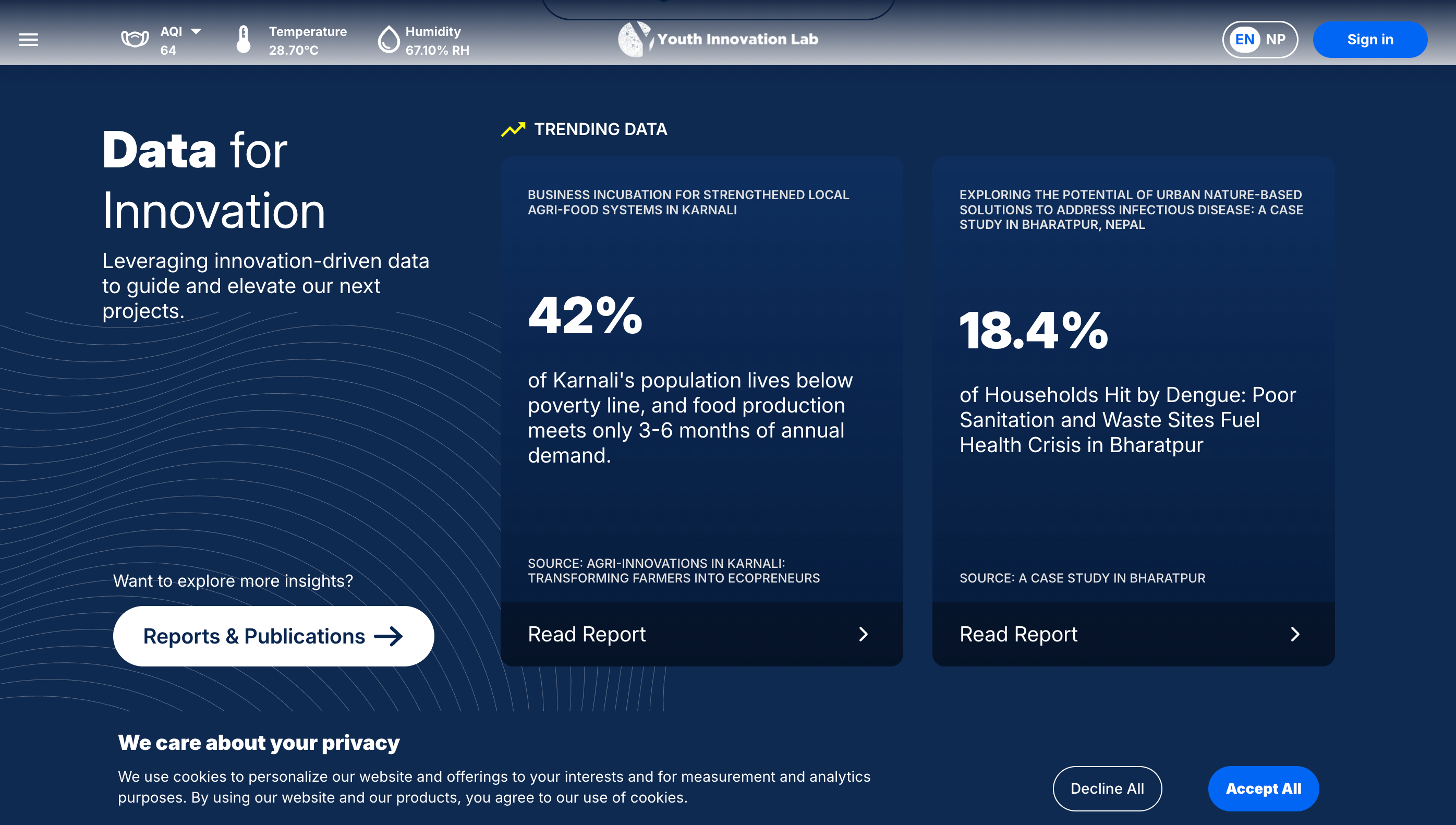
Youth Innovation Lab has carried out drone surveys across affected areas and is converting the imagery into maps, statistics and visual evidence for response and recovery. This is an important step beyond simply collecting photographs: drone imagery becomes far more useful when it can be translated into evidence about damaged roads, buildings, river channels and infrastructure that decision-makers can act on.
Drone Hub Nepal flood monitoring
Drone Hub Nepal has been conducting longer-range and repeated drone surveys to document conditions as they change. Repeated flights can create something a one-time image cannot: a time series. That makes it possible to understand how water levels, river channels, access routes and damaged areas are evolving after the initial disaster.
Satellite intelligence from international partners
Copernicus Emergency Management Service
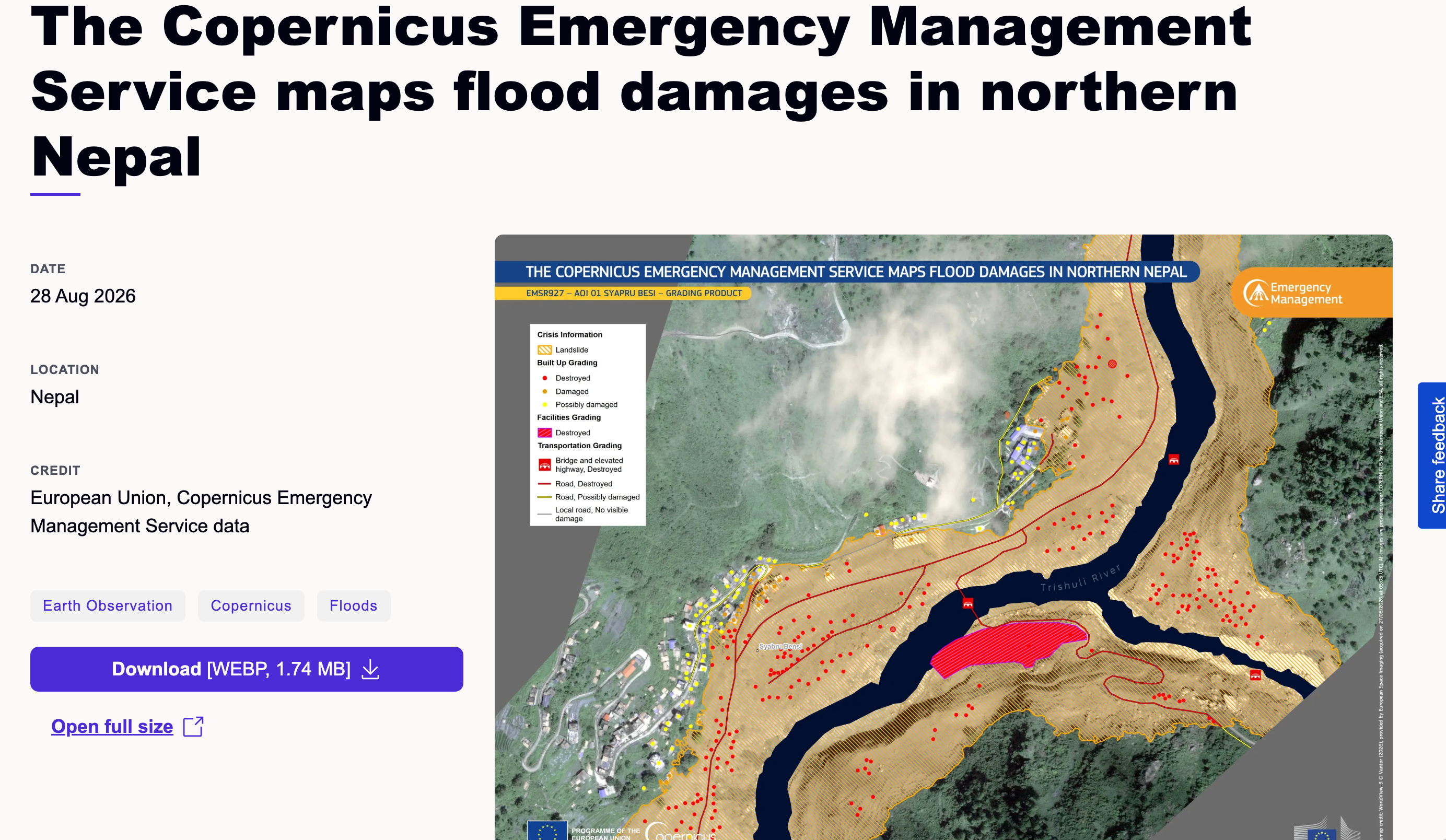
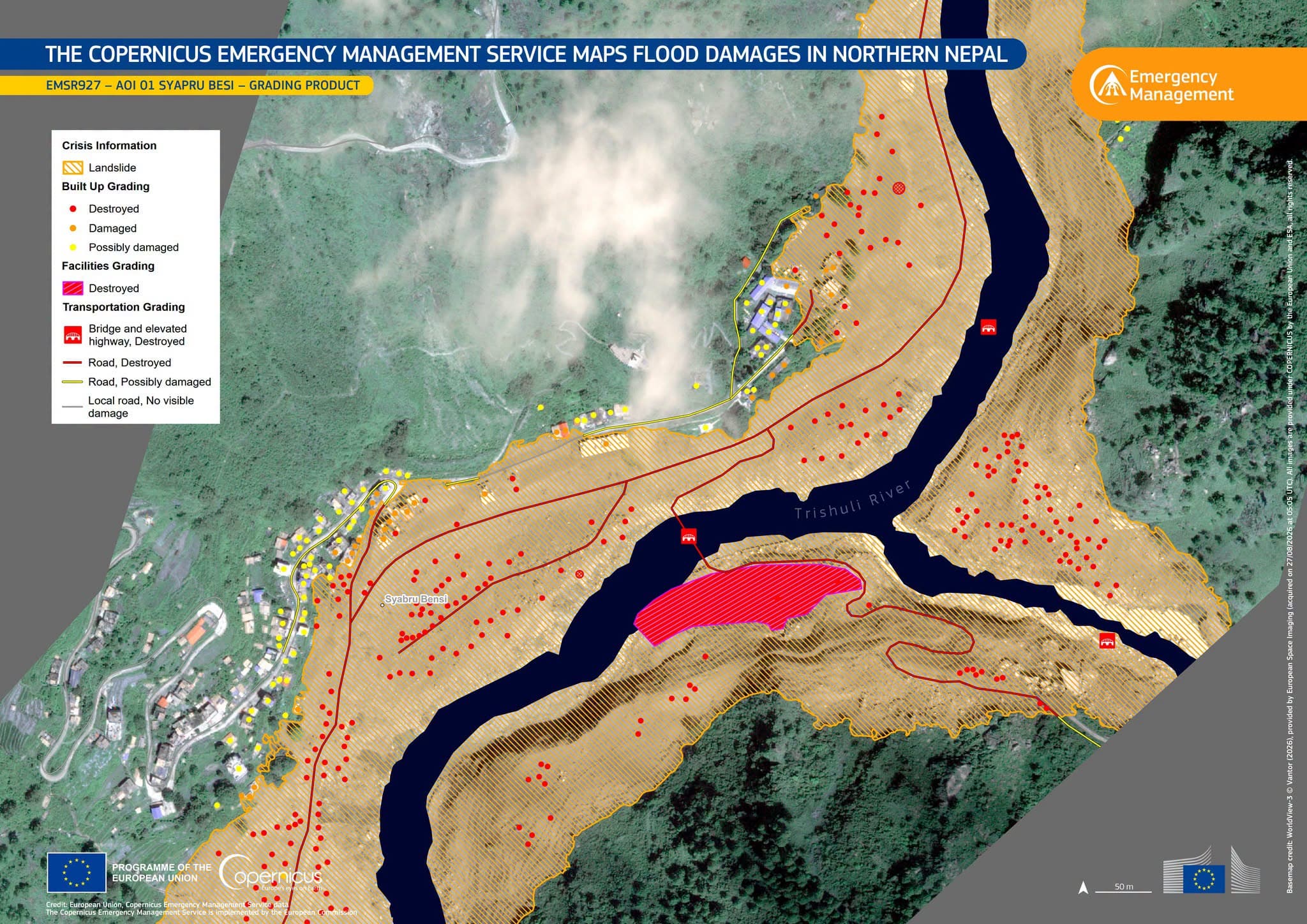
The European Union's Copernicus Emergency Management Service has activated rapid mapping for the disaster. Copernicus can provide very-high-resolution satellite analysis, flood and mass-movement mapping and damage grading for buildings, roads, bridges and other infrastructure. These products create a high-quality common baseline that Nepali responders and technical teams can use without needing to generate all of the underlying imagery themselves.
Sentinel Asia
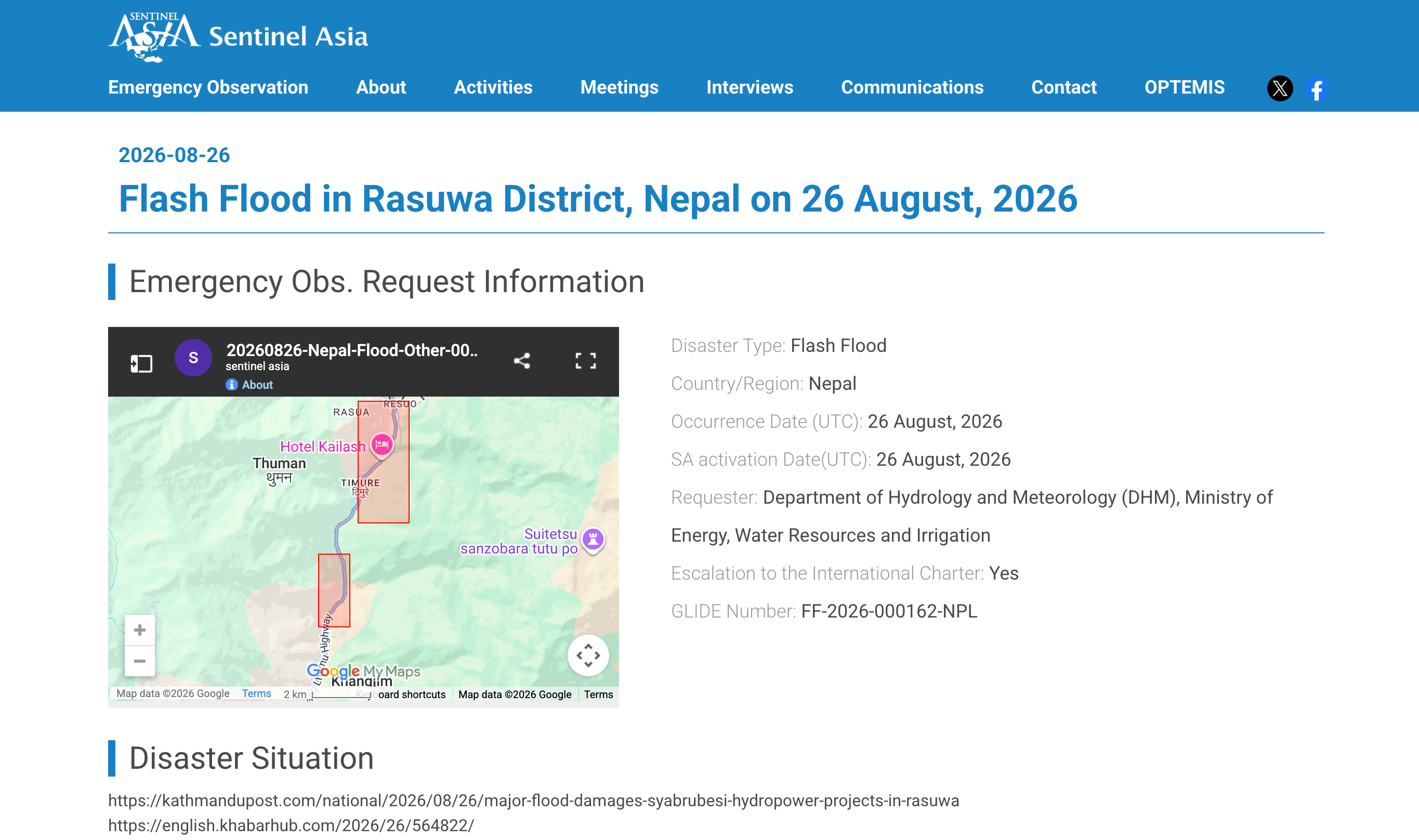
Sentinel Asia, coordinated by JAXA with regional space and disaster-management partners, has also produced satellite observations and disaster-analysis products for Nepal. Using multiple satellite sources is valuable because no single sensor is always available or ideal. Radar imagery, for example, can provide information when clouds limit conventional optical imagery.
Nepali developers built tools within hours
Rasuwa–Bhotekoshi Flood Bulletin
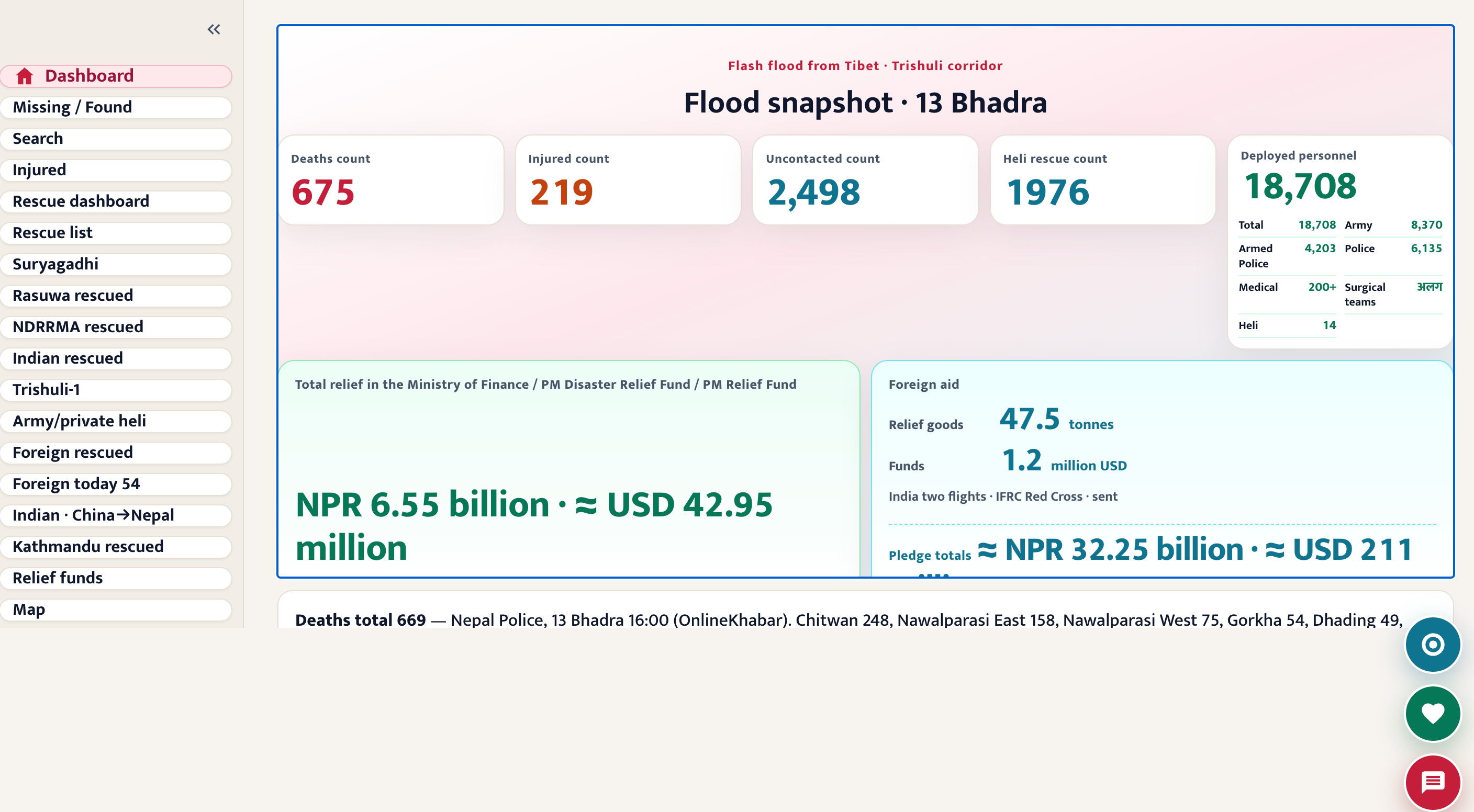
Niraj Bhusal, a Government of Nepal civil servant, created the Rasuwa–Bhotekoshi Flood Bulletin as a rapidly updated, source-attributed information hub. It brings together government information, missing, found, rescued and hospitalized-person records and damage information. The project is a strong example of what a technically capable individual can do when official information exists but is fragmented across many sources.
Nepal Flood Rescue & Relief Bulletin
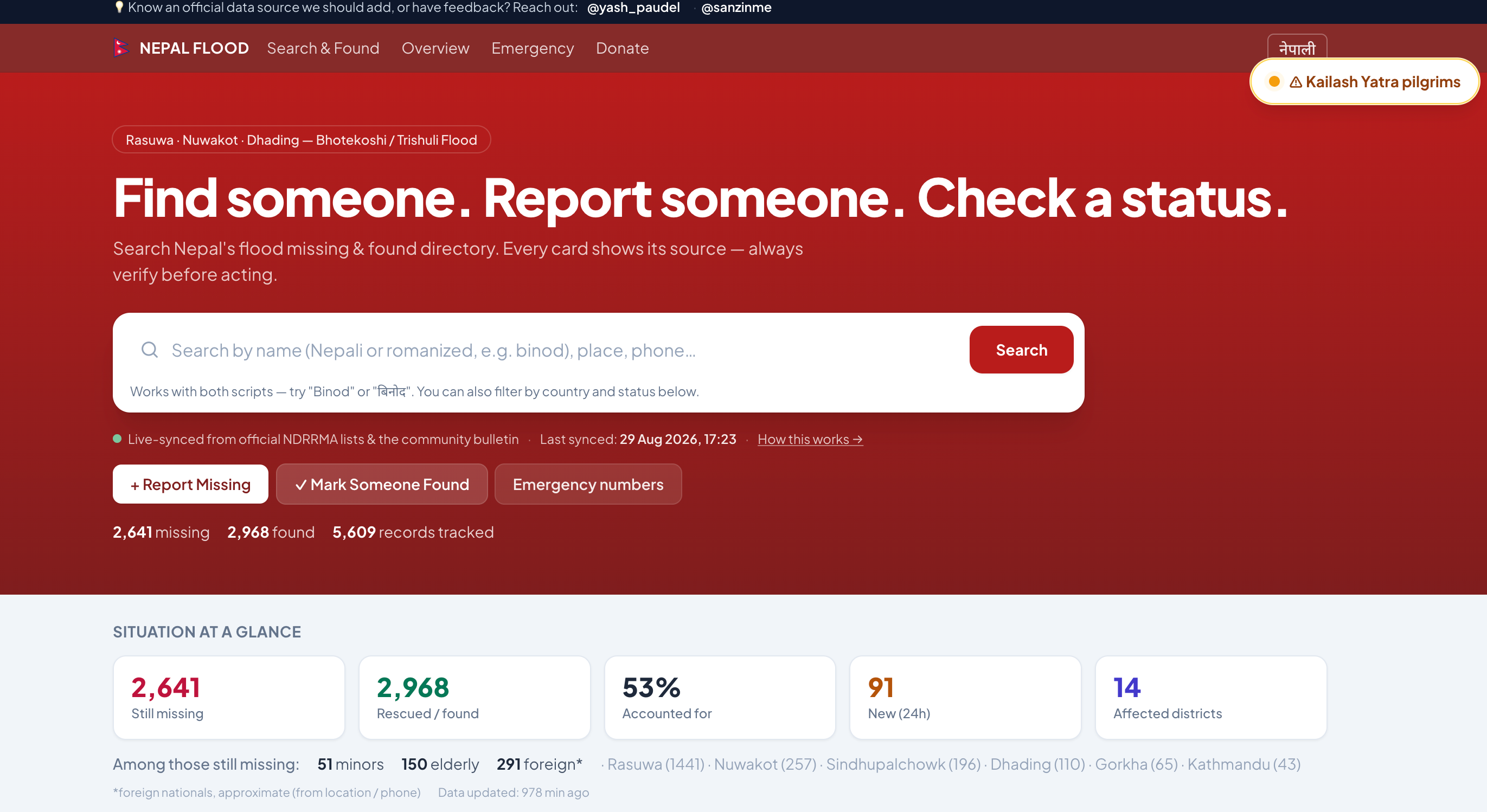
The Nepal Flood Rescue & Relief Bulletin provides another searchable interface to missing and rescued-person information, with support for Nepali and Romanized-name searches alongside river monitoring and emergency information. Its existence also points to a recurring challenge in disaster response: several useful systems may contain overlapping records, so interoperability and deduplication quickly become as important as building the interface itself.
Nepal Flood Watch

Nepal Flood Watch is a lightweight flood and infrastructure dashboard built by Ashish Subedi. It brings together data from hundreds of Department of Hydrology and Meteorology stations with warning thresholds, highway information, weather and incident information. The lightweight design is particularly relevant in an emergency because a sophisticated platform is of limited value if it performs poorly on mobile devices or weak connections.
nepalflood.info
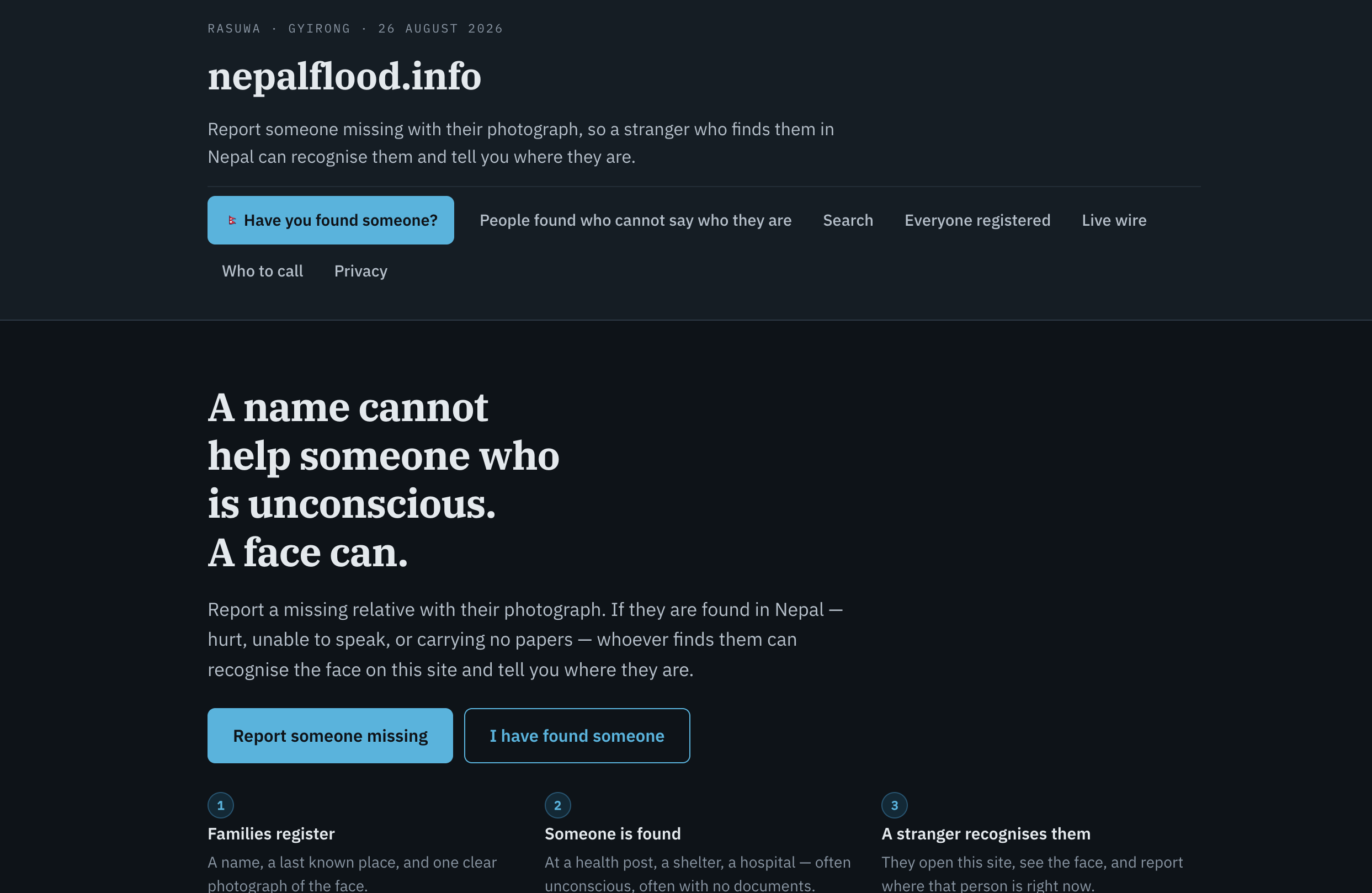
Sero Technologies created nepalflood.info as a missing-person platform with a strong emphasis on identification and data quality. The system supports photographs, alternate spellings and fuzzy-name search, while also addressing privacy and interoperability. That is important in Nepal, where the same person's name can be represented in several different ways across databases and social-media posts.
RescueNepal.org
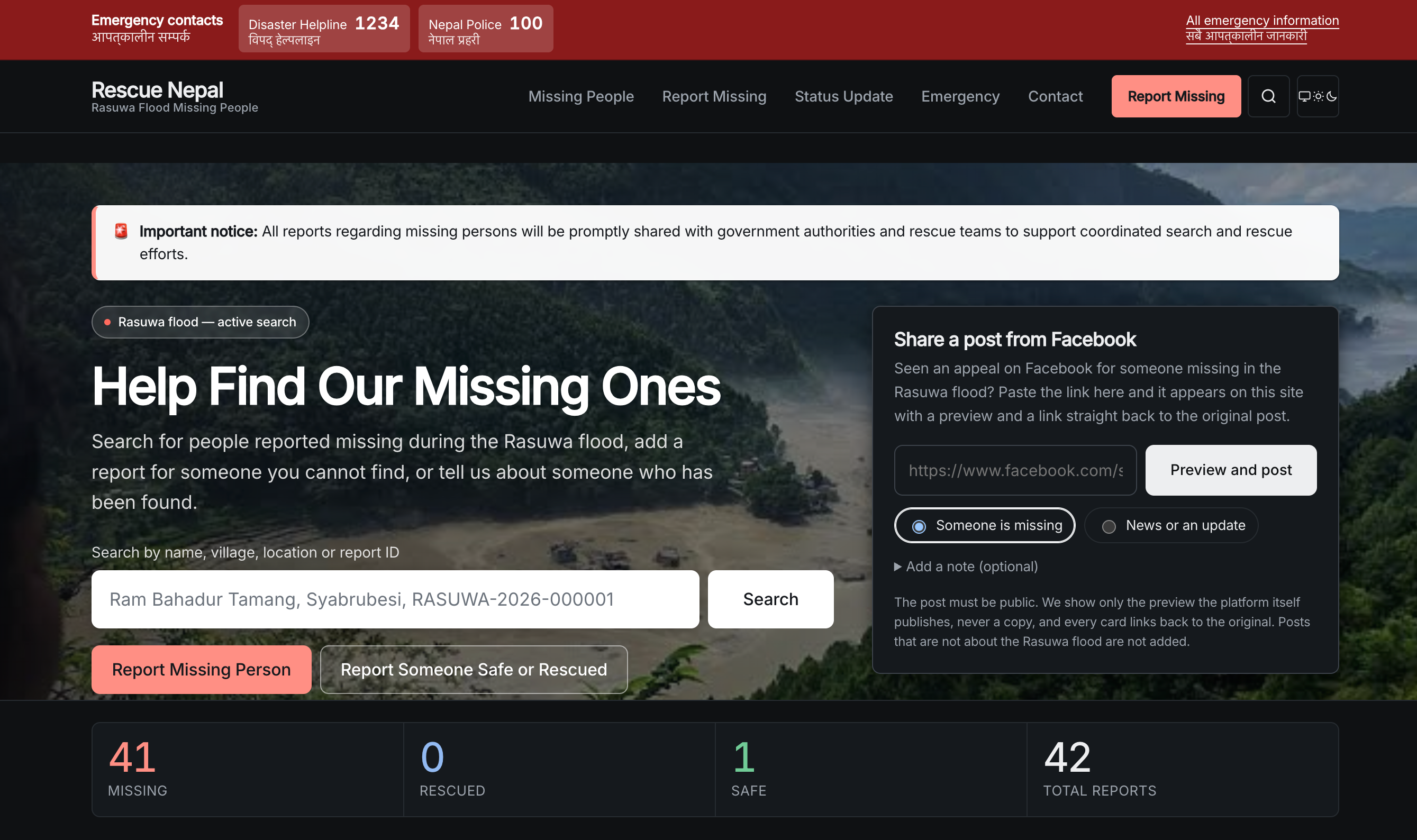
RescueNepal.org is a volunteer-led missing-person and rescue registry that also helps bring information from public social-media appeals into a more searchable form. This addresses one of the hardest information problems in a large disaster: critical details are often scattered across Facebook posts, Instagram stories, messaging groups and personal networks rather than living in a structured database.
Sodhera Nepal Flood
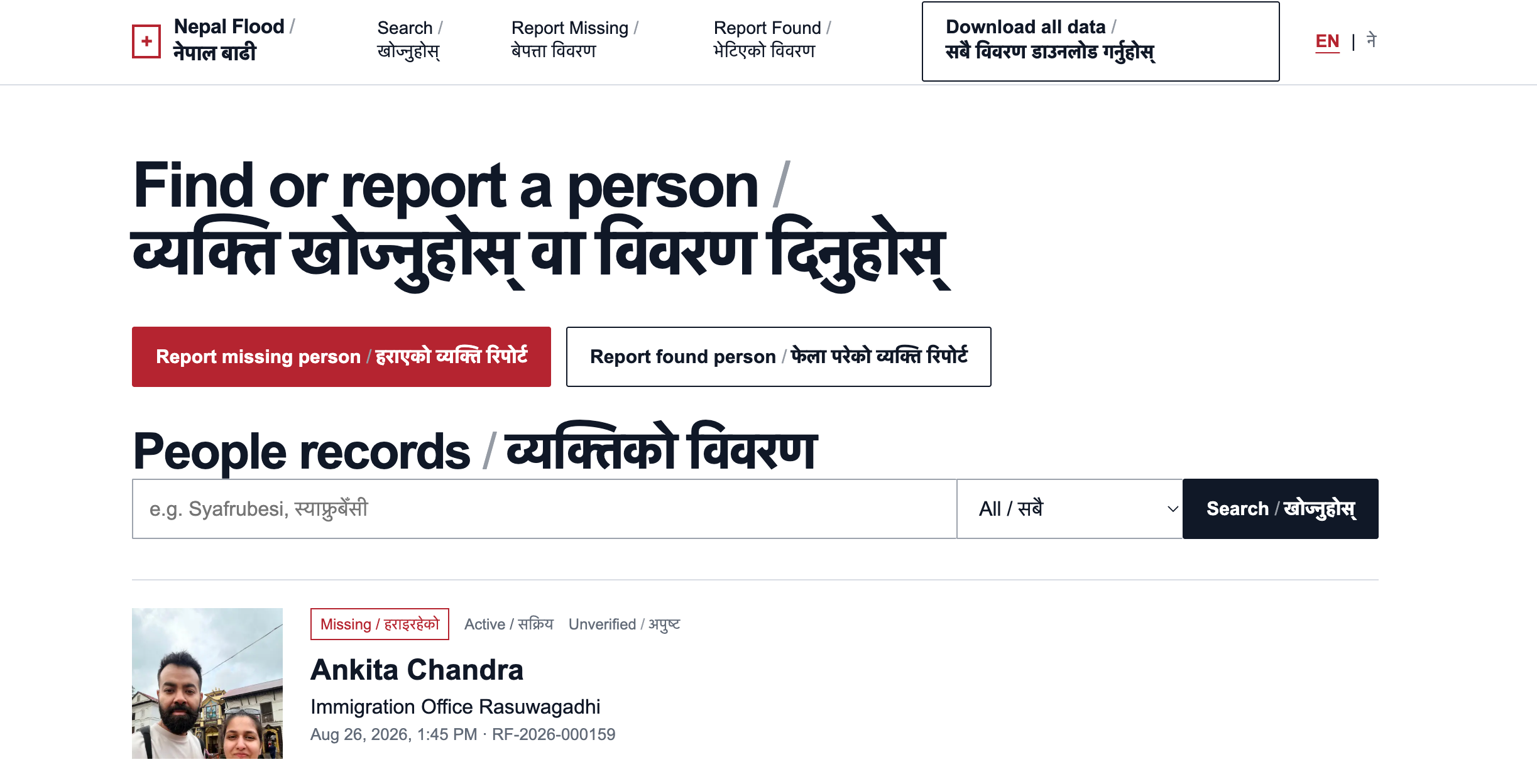
Sodhera Intelligence has created a bilingual searchable missing- and found-person service with downloadable data. Tools like this help reduce the friction families face when the same information is spread across numerous official and unofficial sources.
Nepal Disaster Update Live
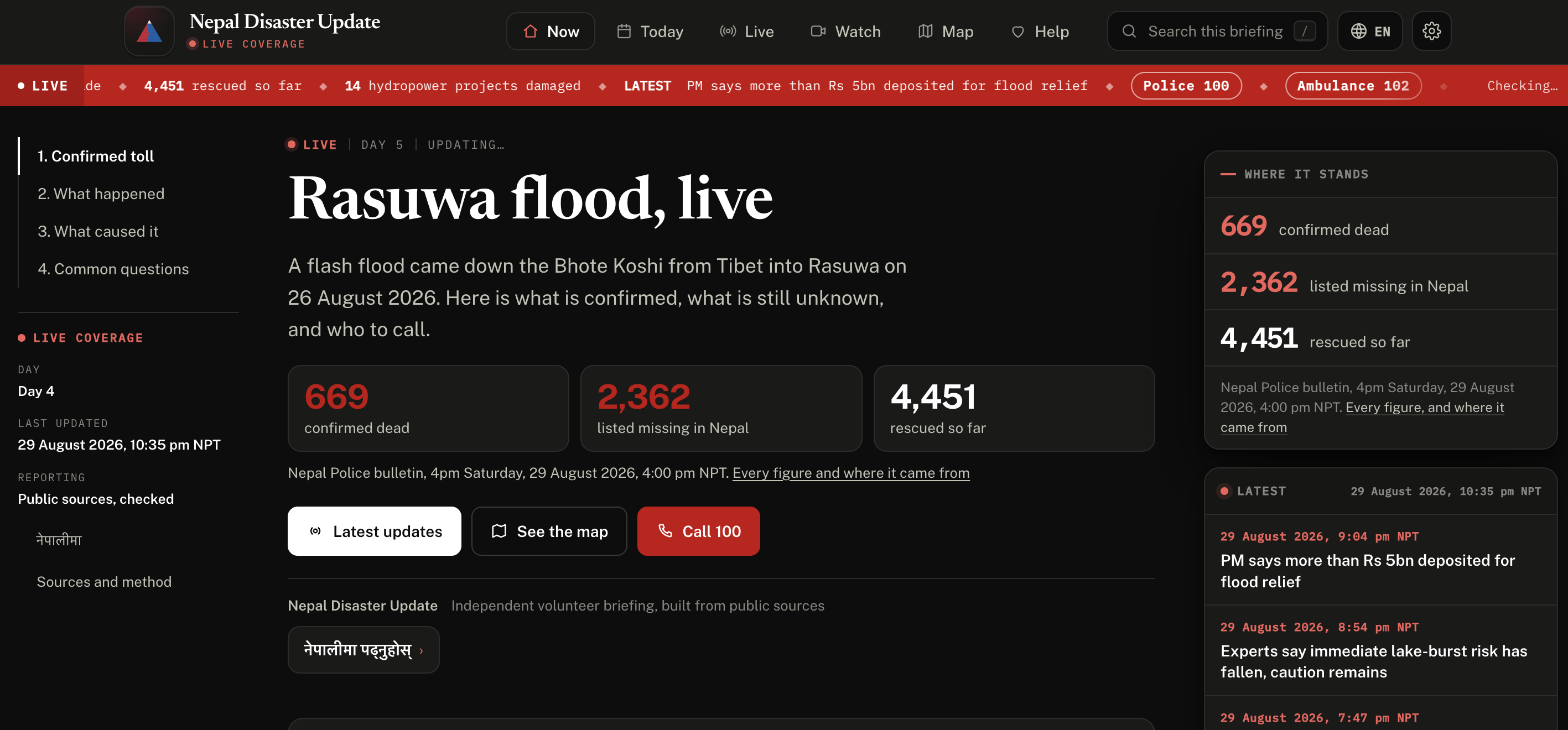
Nepal Disaster Update Live is an independent project aggregating information from official agencies and media sources into a live disaster briefing, with casualty and damage tracking, maps and a chronology of events. A service like this can help users distinguish new developments from information that has simply been repeated across multiple news outlets.
Keeping the communications network alive
Ncell emergency connectivity restoration
Technology response is not only software. Ncell has been working to restore damaged mobile infrastructure and maintain communications in affected areas using alternative connections where normal fiber infrastructure has been lost. For responders and affected families, the restoration of basic mobile service can be as important as any new application.
Nepal Telecom emergency connectivity
Nepal Telecom has likewise been restoring communications and providing emergency support in affected districts. Reliable connectivity is the foundation underneath virtually every other digital response system: rescue requests, maps, drone uploads, family contact, government coordination and emergency warnings all depend on it.
What these projects tell us
The most important lesson from this response is not that Nepal needs more apps. It is that Nepal already has a growing disaster-technology ecosystem operating under enormous pressure.
There are government systems. There are private Nepali technology companies. There are drone pilots collecting field intelligence. There are international satellite programs generating damage data. There are civil servants coding new tools. There are volunteers turning social-media posts into searchable records. There are telecommunications engineers rebuilding the network underneath all of it.
The next opportunity is to strengthen and connect what already exists.
That could mean helping these teams process satellite and drone imagery faster, making missing-person databases interoperable, creating common APIs between rescue systems, improving data verification, automating road and infrastructure damage detection, adding stronger early-warning capabilities or providing the cloud, AI and engineering support required to keep useful projects running after the immediate emergency.
For the Nepal Hackathon, that should be the core principle: do not start by asking what outsiders can build for Nepal. Start by asking the people already building in Nepal what would make their work more powerful.
Projects and links
This list is based on publicly identified projects and deployments and will continue to evolve as new tools and response efforts emerge.
- Nepal flood volunteer
- Nepal Hackathon registration
- Nepal flood response 2026
- volunteer skills Nepal flood
- Bhote Koshi Trishuli flood
- Flood Response
- Tech Projects